← Back home

Ideas, explored.

A place for what I’m learning, what I think, and what I’m trying. From medicine and evidence to everyday life, these are the questions and ideas I want to spend more time with.

Understanding Deeply.

Start with the real-world evidence and EHR research guide to connect study design, clinical trials and drug-development questions with the right methods.

My way of working through ideas in real-world evidence and clinical research: change an assumption, follow the arithmetic, and see what happens.

IPTW vs propensity score matching

Keep comparable pairs, or change how much each patient counts. Explore both approaches with fictional patients, live estimates and a guided tour.

Play with the comparison
One cohort. Three comparisons.
  1. 01
    Start with the raw data

    See how selection can mislead.

  2. 02
    Match similar patients

    Watch pairs form and others drop out.

  3. 03
    Change their weights

    See influence and balance shift.

160 fictional patients · no real study data

Intercurrent events

What happens when patients start rescue care or stop treatment? Follow their journeys, explore five strategies and trace each outcome into the final comparison.

Explore the patient journeys
One trial. Different questions.
  1. 01
    Change what happens

    Add rescue care or treatment discontinuation.

  2. 02
    Choose the question

    Explore five ways to address an event.

  3. 03
    Follow the arithmetic

    Watch patient values become group results.

120 fictional patients · no real study data

Performance metrics

Sensitivity, specificity, predictive values, F1 and AUC answer different questions. Move the threshold and prevalence, then follow the confusion matrix into each calculation.

Play with the metrics
Same test. Different answers.
  1. 01
    Move the threshold

    Watch true and false results change.

  2. 02
    Change prevalence

    Discover which metrics move and why.

  3. 03
    Connect counts to curves

    Explore live formulas, ROC-AUC and AP.

An entirely fictional screen · expected counts per 1,000

Target trial emulation

Design the trial you wish you had. Explore a fictional support program, align time zero, adjust the risk mix and see why the outcome comparison changes.

Build the target trial
One question. A deliberate design.
  1. 01
    Specify the protocol

    Work through seven design components.

  2. 02
    Put the clocks together

    See how immortal time creates a false benefit.

  3. 03
    Make the groups comparable

    Trace standardized risks to the final contrast.

Invented program and population · no real study data

Risks, odds & numbers needed

One 2×2 table connects relative risk, odds ratio, absolute effects, NNT, NNH and attributable fractions. Change fictional counts and discover why the denominator matters.

Explore the four cells
Four cells. Many ways to tell the story.
  1. 01
    Separate risk from odds

    Watch the denominator change.

  2. 02
    Go from differences to NNT

    Keep the relative effect; change the baseline risk.

  3. 03
    Understand attribution

    Explore excess risk and population impact.

Entirely fictional counts · one 12-month outcome

Missing data

Why do outcomes disappear, and what changes when you handle them? Explore MCAR, MAR and MNAR, compare methods, and test assumptions about the outcomes you cannot see.

Explore the missing outcomes
Same study. Different answers.
  1. 01
    Choose what goes missing

    Separate random loss from selective loss.

  2. 02
    Compare the methods

    Delete, impute or weight—and follow the result.

  3. 03
    Move the assumptions

    Inspect uncertainty and a sensitivity tipping point.

2,000 fictional people · one 12-month outcome

Real-world data biases

Six fictional experiments show how the risk mix, starting clock, selection and measurement can distort results. Change the mechanism and trace the comparison.

Explore the bias experiments
Same underlying world. A distorted comparison.
  1. 01
    Change the people

    Explore confounding and selective inclusion.

  2. 02
    Move the clock

    Separate lead time, length time and immortal time.

  3. 03
    Follow the recorded outcome

    Watch measurement change the apparent risk.

Entirely fictional examples · live mathematical explanations

Errors, power & p-values

Connect Type I and Type II errors, alpha, beta, power and p-values. Draw fictional study results and see how repeated testing creates different kinds of error.

Play with power and p-values
One study versus many studies.
  1. 01
    Set the design

    Change sample size, effect, variability and alpha.

  2. 02
    Inspect one result

    Connect the observed gap, p-value and interval.

  3. 03
    Repeat the experiment

    Watch error rates and power become frequencies.

Entirely fictional examples · live mathematical explanations

Rater agreement

Why can 90% agreement produce a low kappa? Edit fictional physician ratings, compare Cohen and Fleiss, and explore repeatability, ordered grades and numeric scores.

Enter the rating room
Same cases. Different agreement questions.
  1. 01
    Change the ratings

    Follow raw agreement into Cohen’s kappa.

  2. 02
    Add more physicians

    See Fleiss’ pooled reference model.

  3. 03
    Look beyond identical labels

    Explore weighted kappa, ICC and score differences.

Entirely fictional ratings · live mathematical bridge

Zero-inflated negative binomial

Two stories can produce the same zero. Count fictional library visits, reveal hidden zero sources, and see how a model’s two parts combine into the overall result.

Explore the two kinds of zero
One count. Two possible stories.
  1. 01
    Reveal the hidden source

    Could not visit, or happened not to?

  2. 02
    Compare four count models

    Same mean, different distributions.

  3. 03
    Combine the two regression parts

    Trace each component into the overall mean.

Entirely fictional visits · guided tour · live calculations

What’s my verdict?

A closer look at the evidence, the trade-offs, and where I land.

Do systematic reviews still matter in the age of agentic AI?

An answer on demand is a compelling promise. What happens toindependent scrutiny, expert judgment and the work behind a trustworthy synthesis?

Read my verdict

Beyond the Usual.

Questions from everyday life, followed wherever curiosity takes me.

Returning to the highlighter: a small habit for deeper reading

A familiar school habit, reconsidered. Choose a few meaningful phrases, preserve the qualifications, and check what you remember after looking away.

Revisit the reading habit
Original drawing of an open book with a few light-blue highlights and a teal highlighter.

Understanding seed funding: one company, every round

One fictitious business, from its first cheque to Series D and beyond. Follow the cash, watch ownership change and try the numbers yourself.

Follow Company X

$8M value before+$2M new cash

$10Mvalue after the investment80% existing owners · 20% new investors

Musings of Muay Thai - Building a Strong Core and a Stable Body

A practical routine for the body behind the strikes: strength, core control, single-leg balance and recovery. Includes two weekly sessions and a simple progression plan.

Explore the training routine
Crayon illustration of blue boxing gloves and red hand wraps.

Musings of Muay Thai - Balance, Body Mechanics and Better Strikes

A balanced jab, punches connected to the body, and a round kick led by the hip. The small corrections I want to carry from one training session into the next.


Read the training notes
Crayon illustration of blue boxing gloves and red hand wraps.

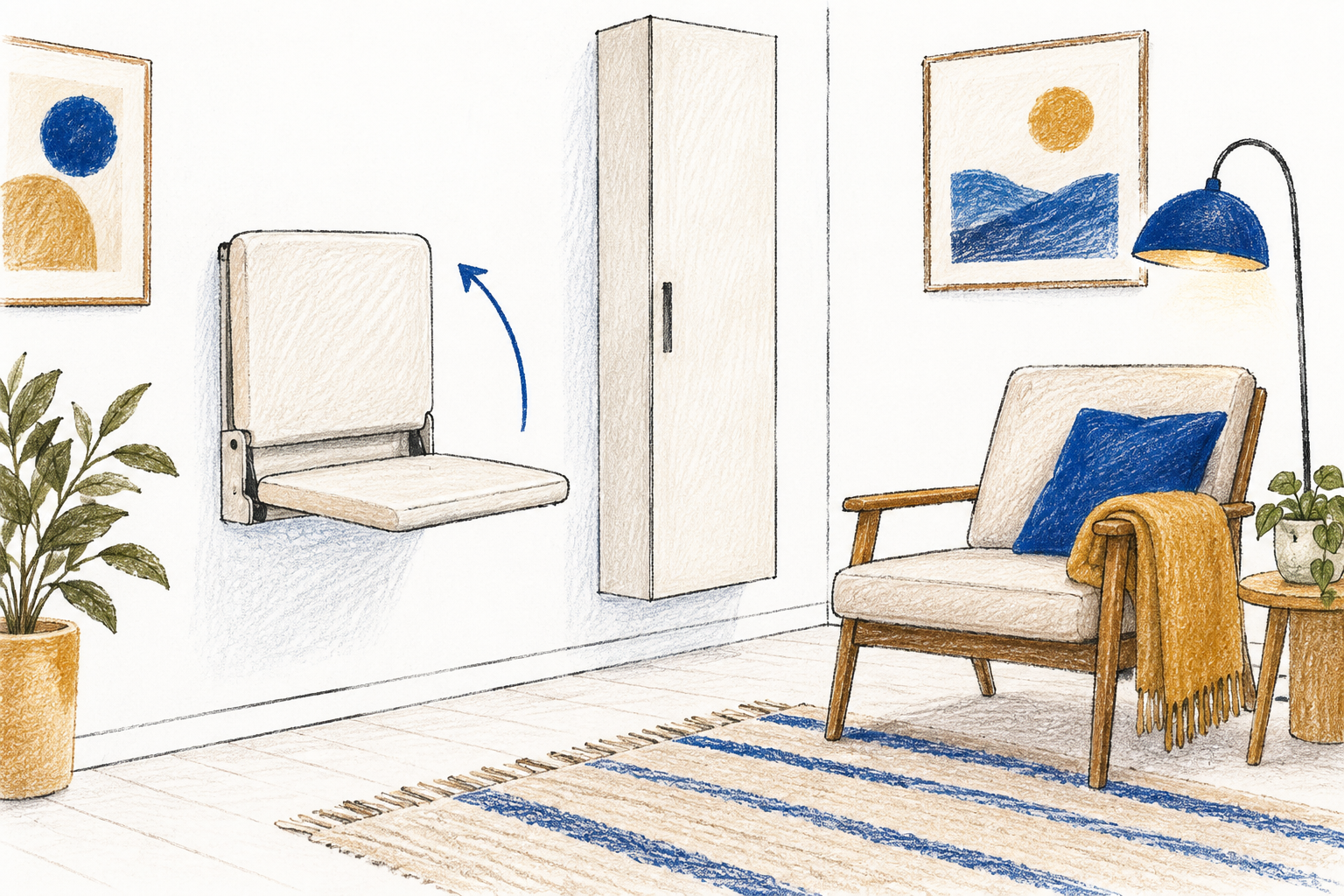
Planning a minimalist home, one revision at a time

A fictional apartment, furniture that folds away, and the small revisions that make room for daily life. Includes an interactive 3D example.

Explore the experiment
Colored-pencil illustration of a folding seat and reading chair in a fictional room.