On 1 November 2026, I finished the Cambridge Half Marathon with a net time of 1 hour, 56 minutes and 17 seconds. I had set myself a two-hour goal; I crossed the line with 3 minutes and 43 seconds to spare.
I ran as Praveen Kumar Marimuthu for Cambridge Running Club, wearing bib 5142. The published results record my average pace as 8:53 per mile.
Race morning brought cool air. At Boston Logan, a nearby weather station, the National Weather Service recorded 41°F at 6:54 a.m. and 48°F at 8:54 a.m. EST, close to my start and finish. The station also reported a few clouds and westerly winds of 6–8 mph.
Race result
| Net finish time | 1:56:17 |
|---|---|
| Average pace | 8:53 per mile |
| Overall place | 4,015 of 8,725 |
| Male place | 2,659 of 4,361 |
| Male, ages 30–39 | 736 of 1,197 |
| Checkpoint | Elapsed time |
|---|---|
| 10 km | 0:51:34 |
| 15 km | 1:19:06 |
| One mile to go | 1:46:18 |
| Finish | 1:56:17 |
The Last Mile Racing, the event’s timing provider, published my individual result on RTRT.me. I checked it on 1 November 2026. The provider currently marks times and places as preliminary and subject to change.
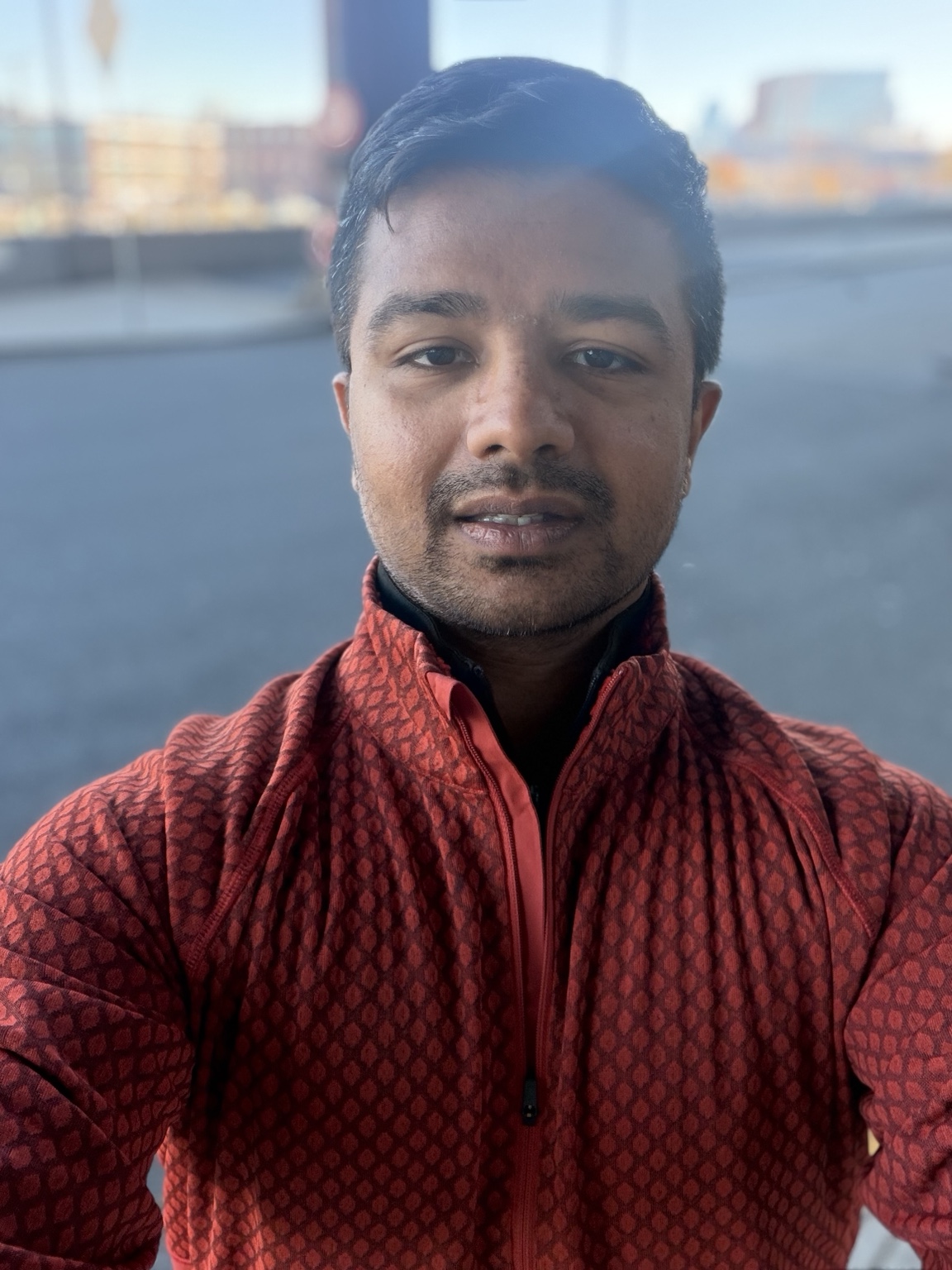
Looking back, I want to remember how I found a rhythm, managed my fuel and adjusted my pace.
Finding rhythm through my shoulders
I focused on moving my shoulders and arms back and forth from the shoulder joints. When my legs began to tire, that upper-body rhythm helped me feel I could keep going. It gave me a simple cue to return to throughout the race.
Keeping water and fuel in the routine
I took at least a sip of water at almost every hydration station. I also used Science in Sport (SiS) gels, my source of carbohydrate and caffeine, taking one before the race and two during it. I found it helpful to keep drinking and refuelling as the miles accumulated.
Around the seventh mile, I began to feel slight cramping in my calf. Even with the water and gels, I had to manage that discomfort through the remaining miles.
Less clock-watching, more running
To reduce anxiety, I avoided checking my watch and counting off the miles. Around 6.6 miles, I began looking for the roadside mile markers. They gave me enough information without drawing me back to the clock.
Using the pacers as a reference
For roughly the first seven miles, I stayed with or a little ahead of the 1:50 pacer. When I lost that group, I turned my attention to the 1:55 pacer. I finished in 1:56:17 net, comfortably under two hours.
Following a pacer gave me a clear reference. I preferred leaving a little space ahead of the group to running in a tight cluster behind it. The quicker early pace also gave me some margin against my two-hour goal when I had to pay more attention to my calf later on.
What I wore and carried
- Half tights: PYNRS Franklin Half Tights, men’s large.
- Half-zip top: Ciele Athletics VLVHalfzip, in Clay, men’s medium.
- Race top: the Cambridge Half Marathon–provided long-sleeve top, men’s medium.
I also wore a FITGRIFF running belt with two pockets and kept my three Science in Sport (SiS) gel sachets together in one of them.
I am pleased to have reached my goal. For the next race, I want to keep the same habits: finding a steady rhythm, drinking regularly, planning my fuel and using the pacers as a guide. I also want to leave room to adjust as the race unfolds.
View the event’s 2026 results